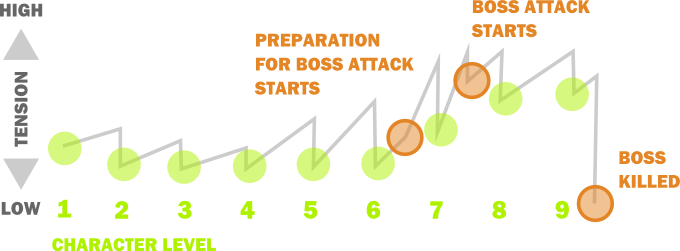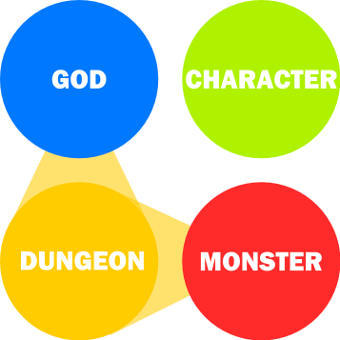
In this second part of analyzing Desktop Dungeons, we look at how choices are given meaning not only through their complexity, but also through the role they play in structuring an experience.
This article gives a brief tutorial to XNA, a set of game development tools from Microsoft. The tutorial covers the basics of drawing a sprite, playing sound, and handling input.
This is the first part of an in-depth look at the design of Desktop Dungeons, the South African game that won the Excellence for Design Award at the IGF. In this part, we look at the player actions, choices, and tension.
Julian Pritchard { I find that the essence of great indie games comes from knowing their core rules. If all gameplay adheres to the core rules, then emergent... } – May 11, 9:11 PM
Amir Barak { Insanely detailed, well written and an interesting read Being in the process of developing a game that has a web of interconnected rules and... } – May 11, 5:17 PM
Jarrod Swartz { Great article! Very informative. } – May 08, 9:51 AM
Aditya { Nothing to beat a simple tutorial with Actual Screen shots. } – Apr 26, 9:44 PM
Diorgo Jonkers { Thanks for the feedback Ben, max and cool math Glad you found it useful. } – Apr 23, 8:56 PM